
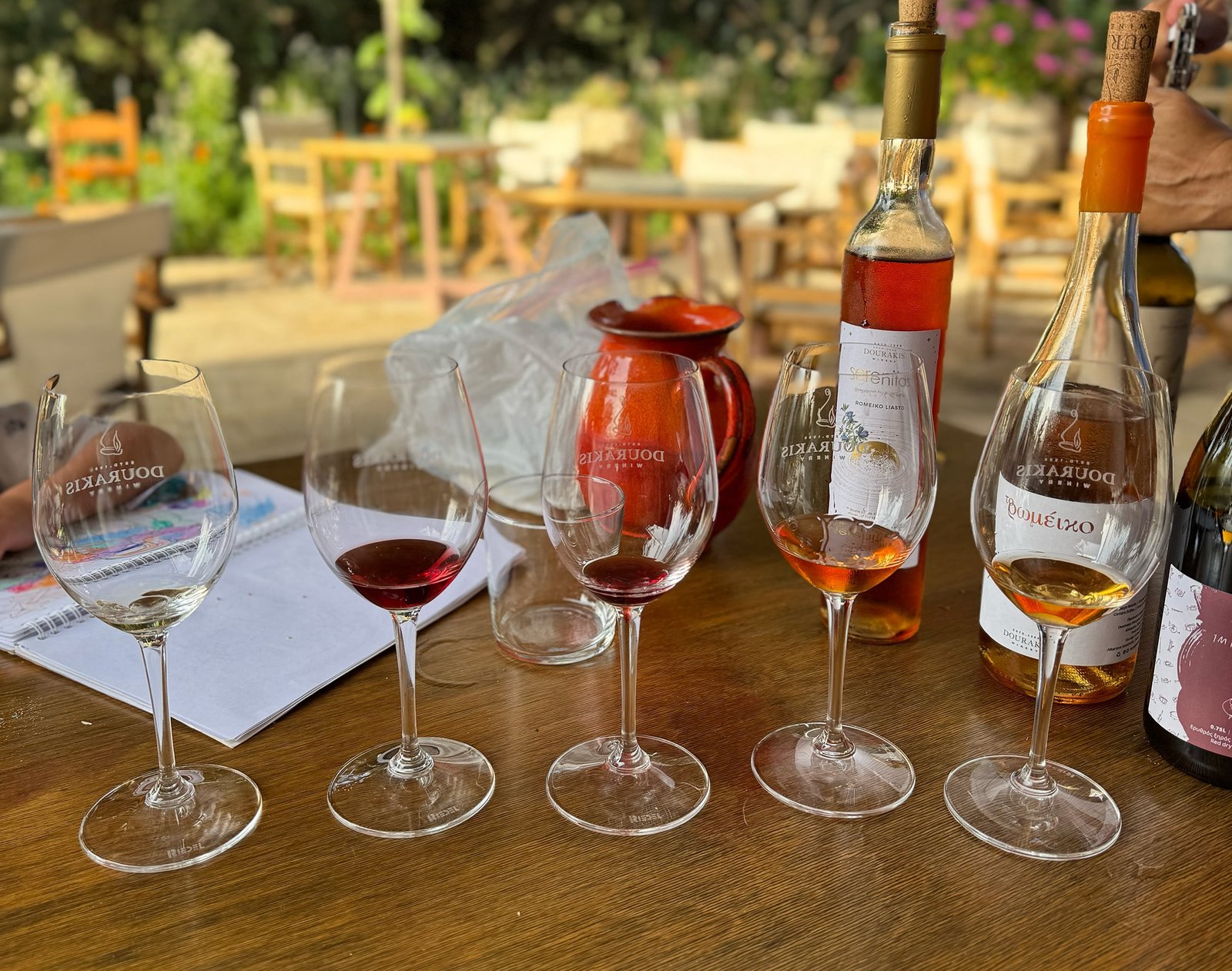
Dourakis Winery
There are wineries you visit because they are well known. Others because they produce great wines. And then there are those that leave a lasting impression because they tell a story through every bottle.
Dourakis Winery, in the village of Alikampos, in the Apokoronas region of Chania, belongs to the latter category.
Founded in 1988 by the late Andreas Dourakis after returning to his native village from Germany, where he studied oenology, the winery was born from a vision that was far from obvious at the time. In an era when most Cretan wine production was still dominated by inexpensive bulk wines, Andreas believed that Crete’s indigenous varieties deserved to be bottled with the same ambition and respect as Europe’s great wine regions. More than three decades later, that philosophy continues under the leadership of the second generation of the family.
Today, Dourakis farms approximately 83 hectares of vineyards and produces around 225,000 bottles annually, with only about 10% exported. Rather than pursuing volume or international trends, the estate has remained remarkably committed to expressing its local identity through both indigenous varieties and carefully selected international grapes.
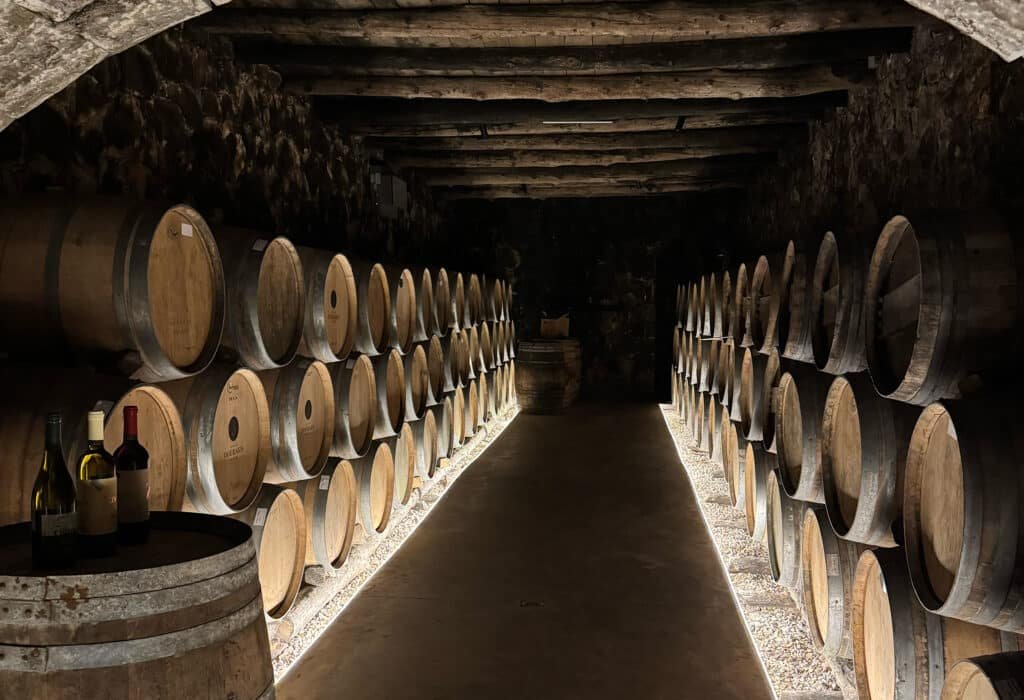
A Terroir That Explains More Than the Climate
Western Crete is often perceived simply as «Mediterranean», but the vineyards around Alikampos tell a far more nuanced story.
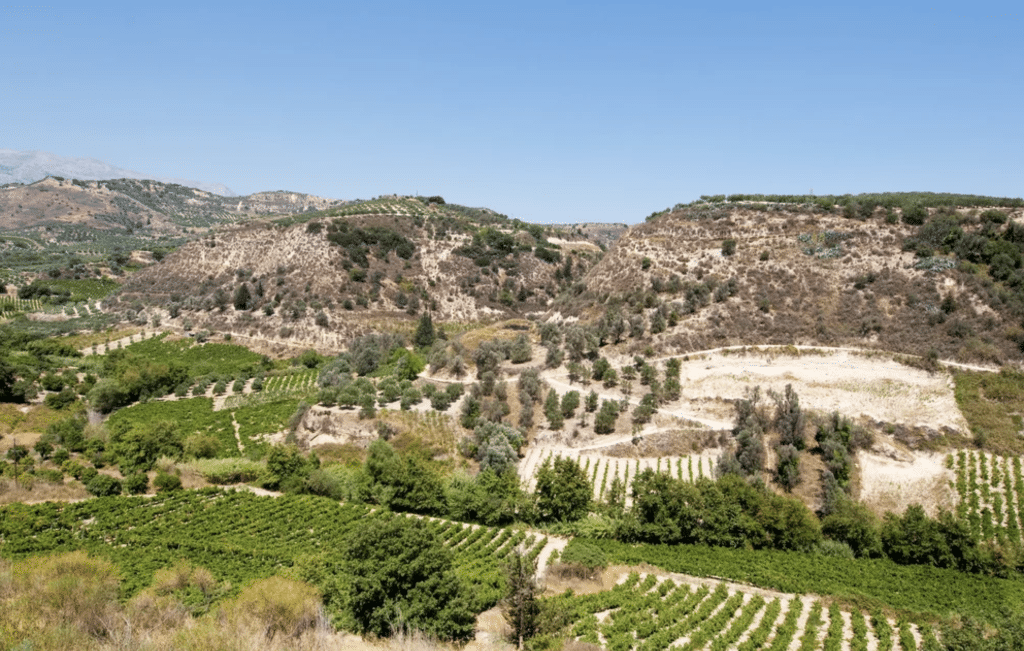
Located roughly 350 metres above sea level, between the White Mountains (Lefka Ori) and the Cretan Sea, the vineyards benefit from significant diurnal temperature shifts, constant ventilation and predominantly clay-limestone soils scattered with rocky outcrops. Viticulture in this part of Chania dates back to Minoan civilisation, making it one of Europe’s oldest continuously cultivated wine landscapes.
What impressed me most throughout the tasting was that, despite the warm Mediterranean climate, virtually every wine shared one unmistakable characteristic: salinity.
Not in the simplistic sense of «minerality», but as a genuine saline tension running through the palate, bringing freshness, precision and remarkable gastronomic balance.
It became the defining fingerprint of the estate.
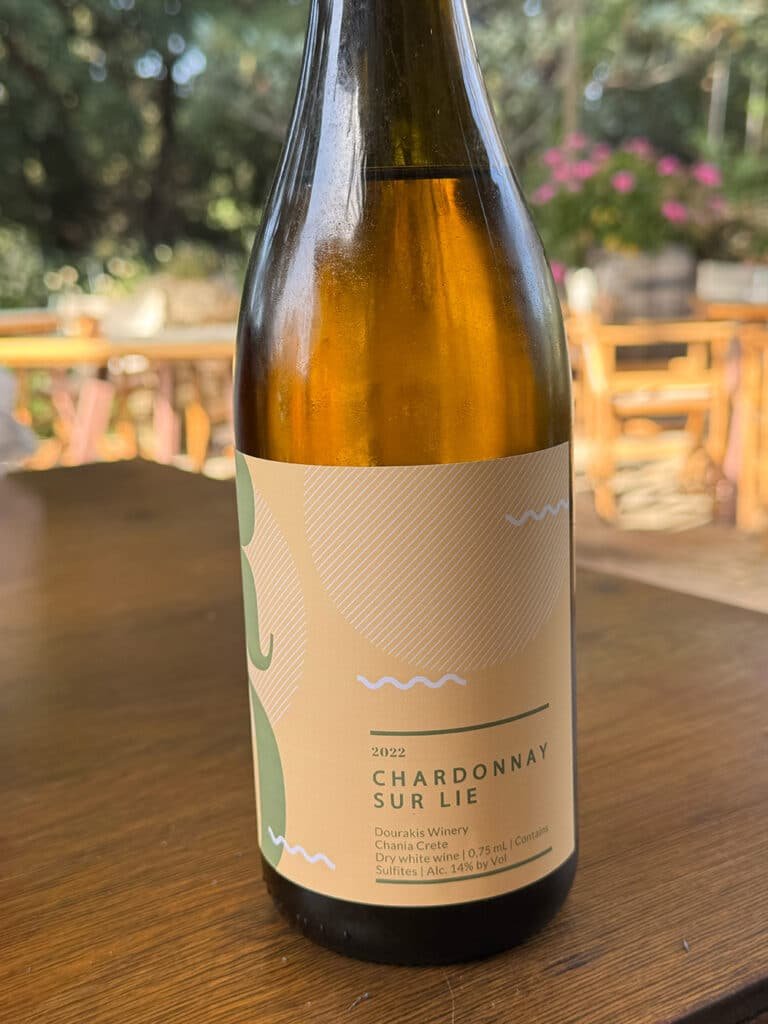
Chardonnay That Speaks Cretan Rather Than Burgundian
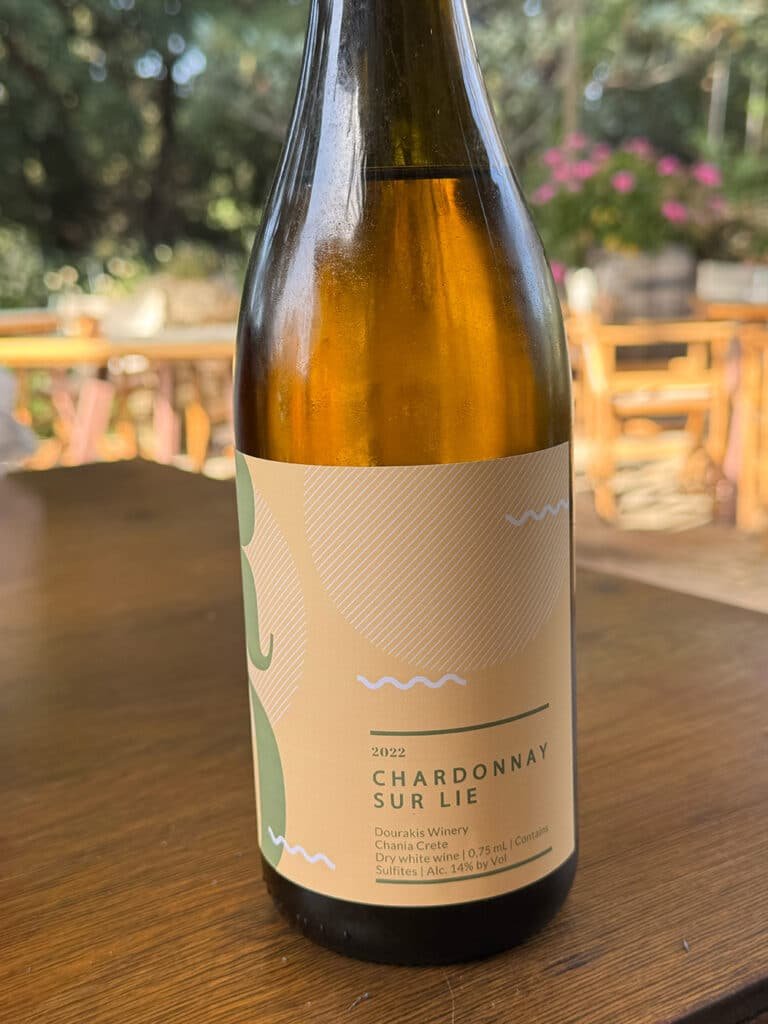
Ironically, my favourite wine was not made from an indigenous variety. The Chardonnay Sur Lie 2022 was, for me, the standout wine of the tasting.
It is a remarkably precise wine, showing outstanding linearity and tension. The lees ageing adds texture without weight, while oak remains perfectly integrated, never becoming the protagonist. Instead, the wine combines freshness, structure and that recurring saline character that seems to define the estate’s identity.
Rather than imitating Burgundy, it expresses Chardonnay through a distinctly Cretan lens. The result is a gastronomic wine that feels confident, restrained and highly drinkable.
Indigenous Grapes, Contemporary Interpretation
Dourakis’ greatest contribution may be its ability to reinterpret native Cretan varieties without stripping them of their authenticity.
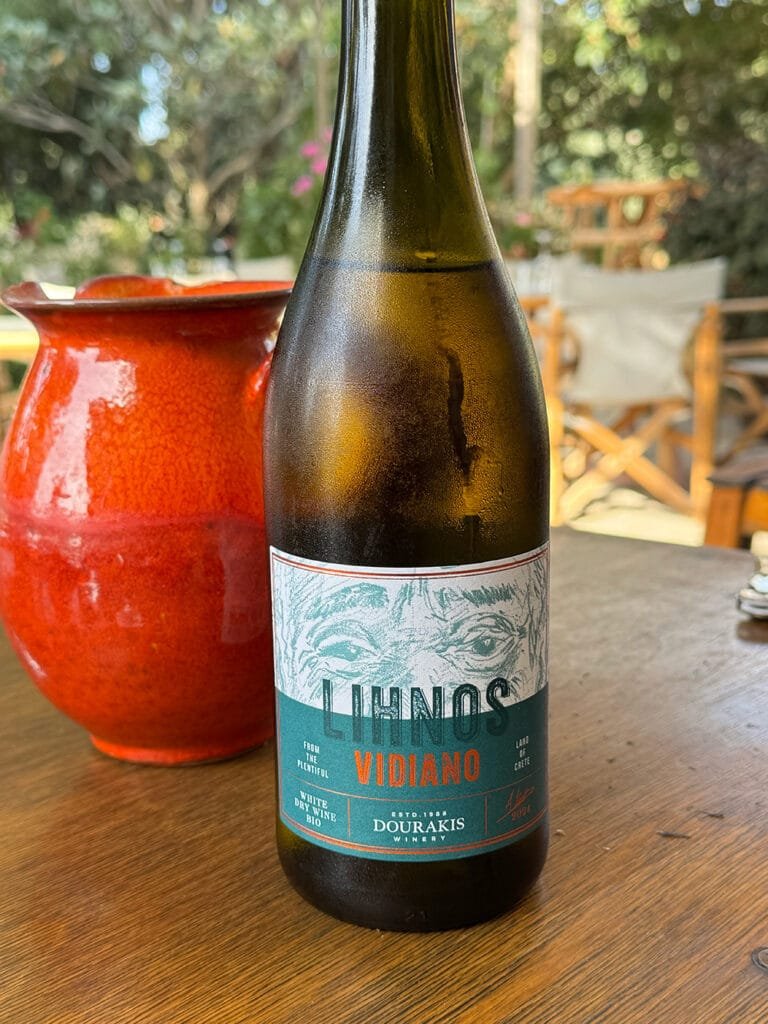
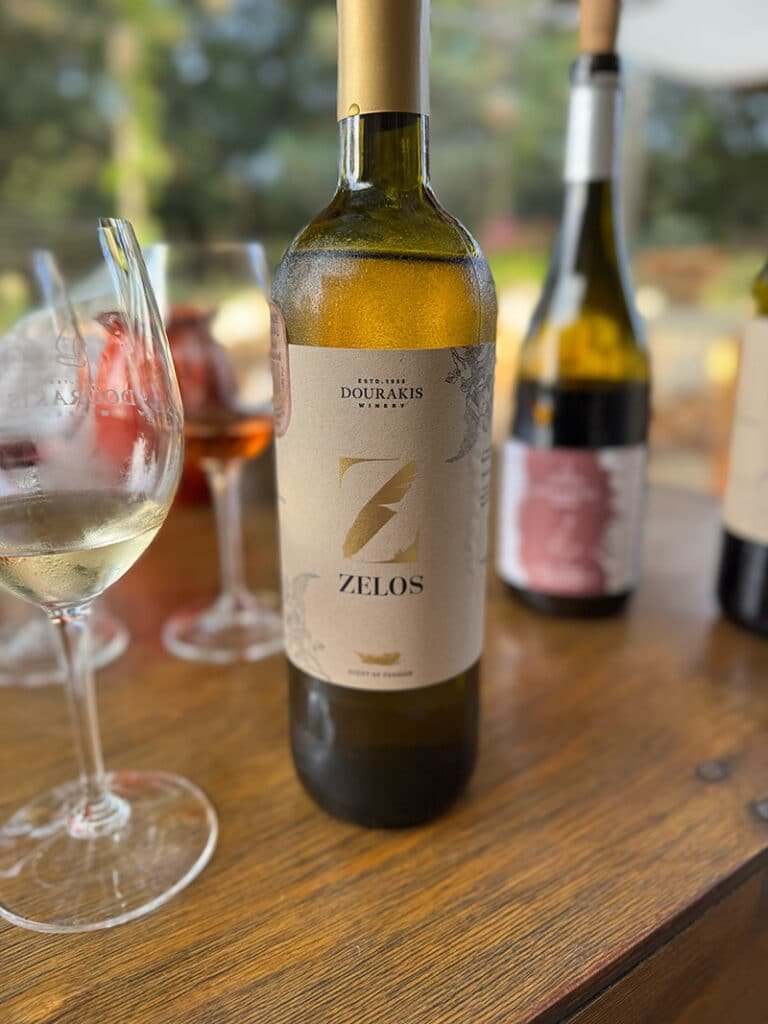
Vidiano was perhaps the most intellectually intriguing wine. Rich, textured and generous, it reminded me simultaneously of Viognier, a Jura Chardonnay and, stylistically, some of Rioja’s finest barrel-fermented Viuras. Batonnage and oak contribute volume and complexity, yet the wine never loses its freshness.
The Muscat of Spinas, one of western Crete’s most distinctive indigenous white grapes, delivered aromatic purity while maintaining impressive balance and salinity, avoiding the excessive exuberance that Muscat can sometimes display.
The Malvasia expressed attractive aromas of pear and green apple, finishing with a subtle phenolic bitterness that enhanced its gastronomic appeal.
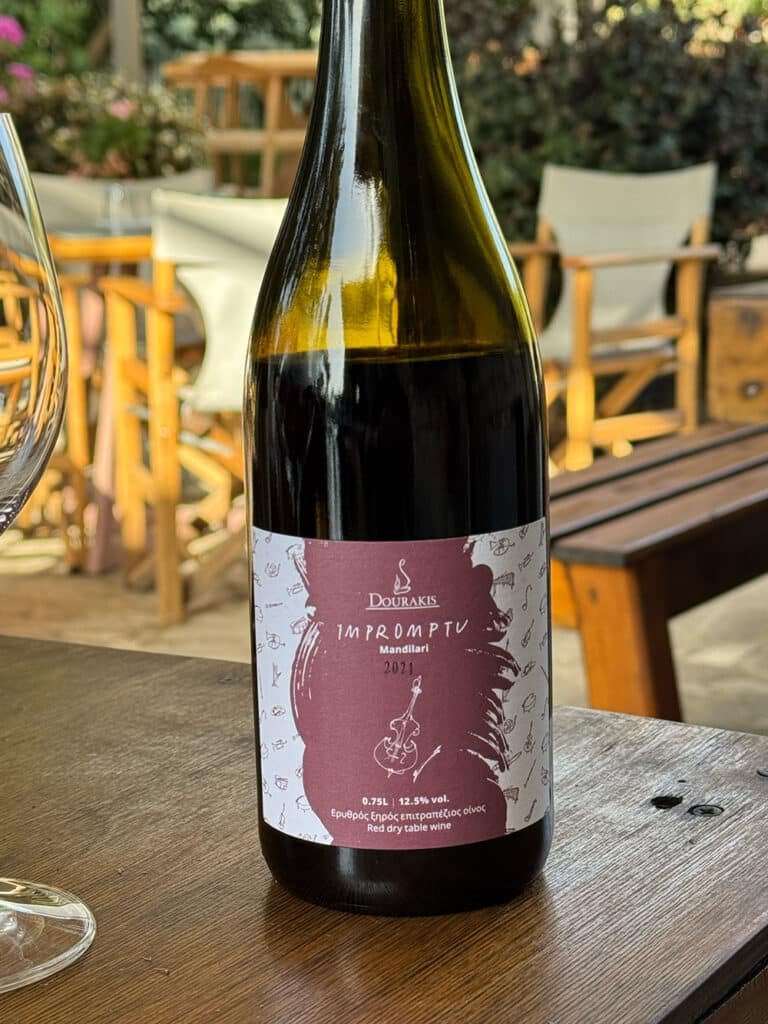
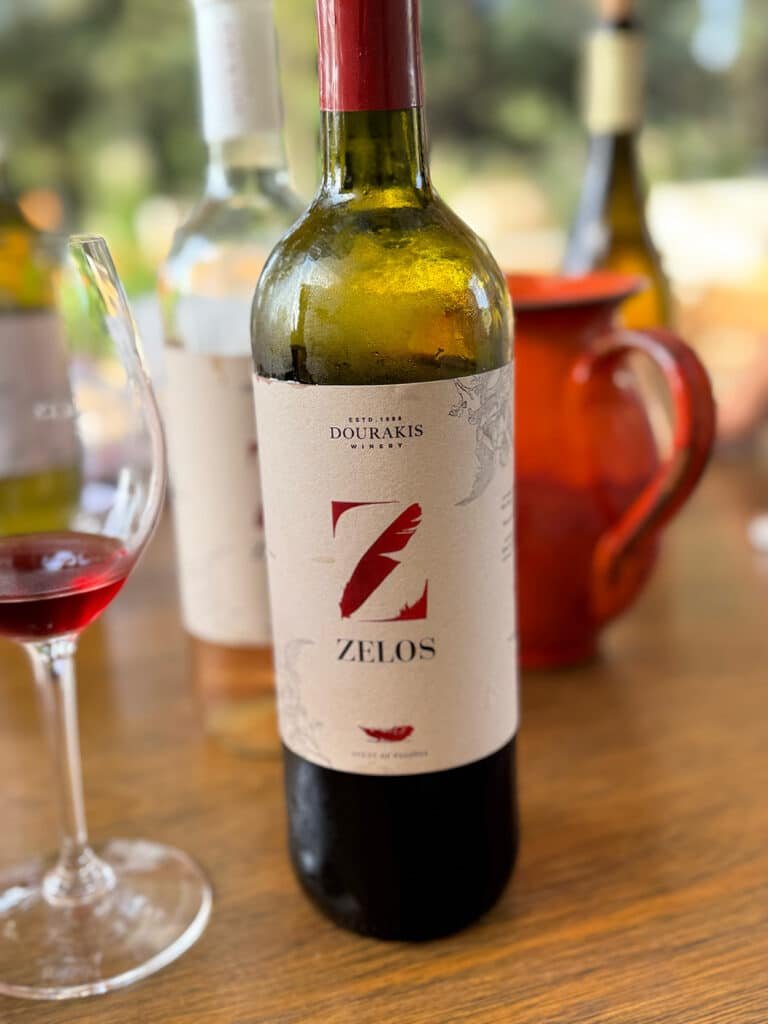
Among the reds, Rotsifali stood out for its reductive style, displaying precise raspberry fruit alongside dried Mediterranean herbs. It felt modern, focused and technically very well executed.
Rediscovering Romeiko
Perhaps the most fascinating chapter of the tasting revolved around Romeiko, one of Crete’s oldest indigenous red varieties and historically associated with the Chania region. Instead of limiting themselves to traditional interpretations, Dourakis explores Romeiko through multiple expressions.
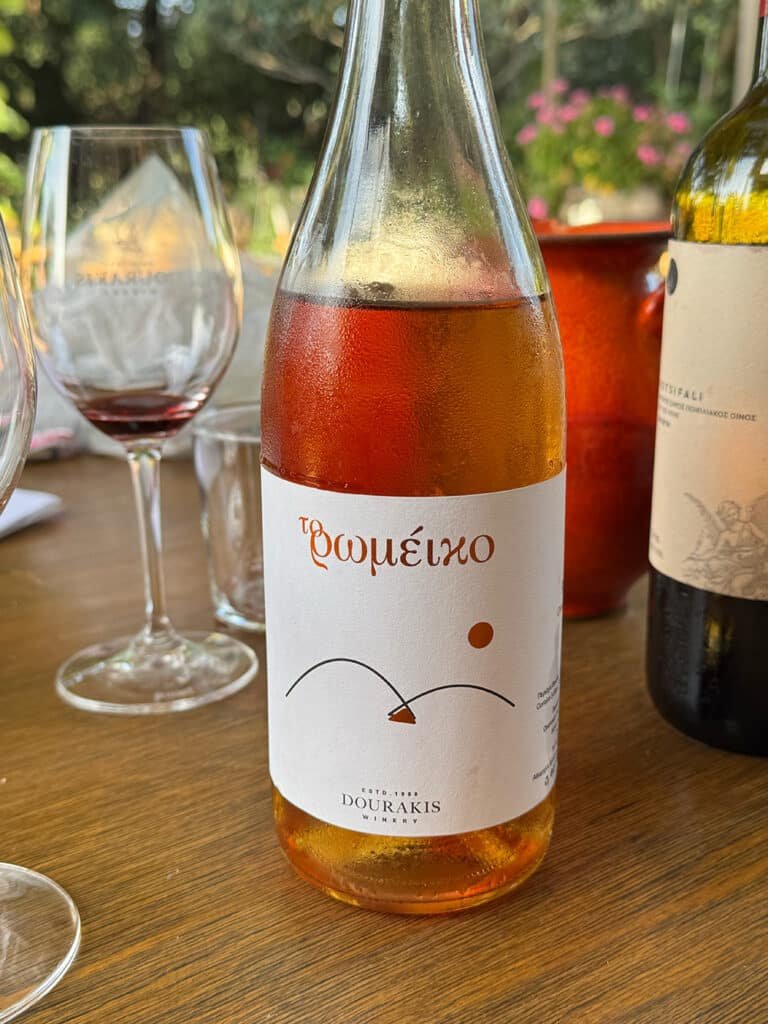
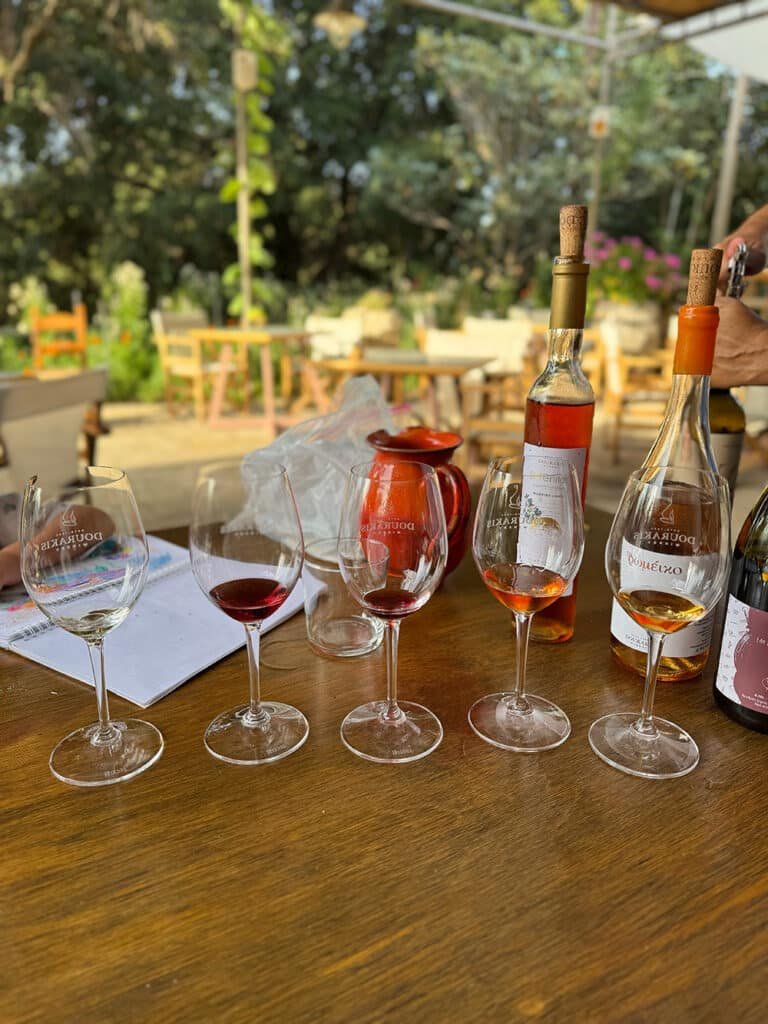
The most distinctive was To Romeiko, a Blanc de Noirs produced from red grapes with virtually no skin contact before undergoing approximately two years of oak ageing. The result is unlike almost anything else: elegant aromas of candied orange peel and dried apricot, remarkable aromatic intensity, impeccable balance and a medium-long finish that invites food pairing rather than contemplation alone.
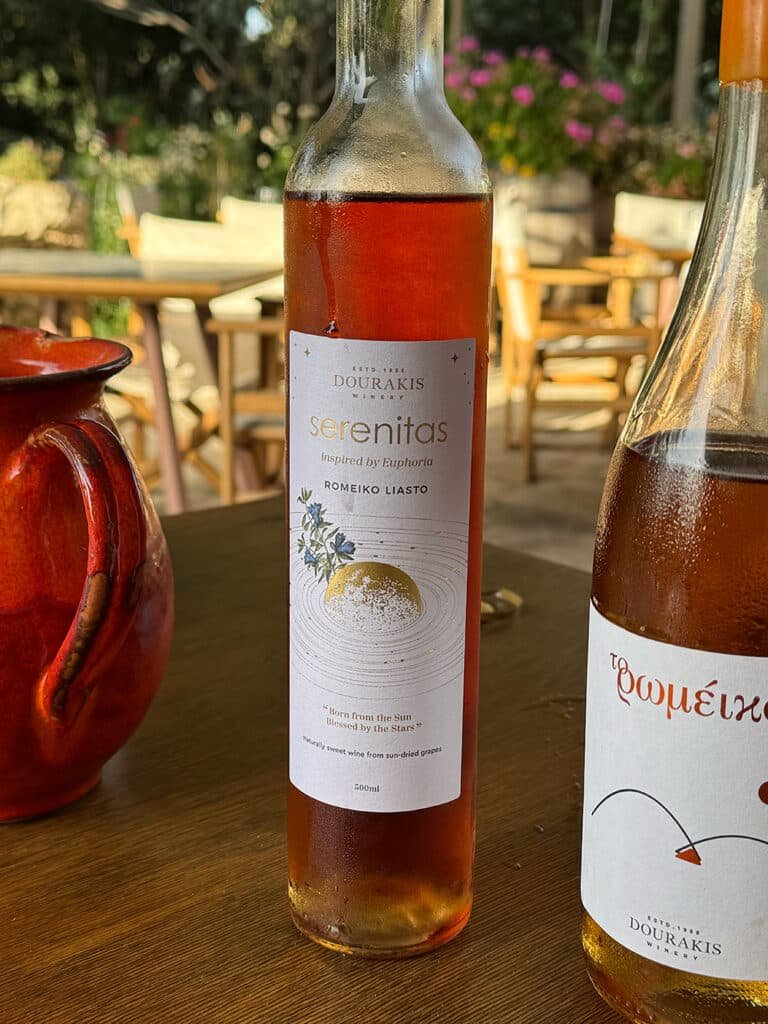
Equally memorable was the estate’s sweet Romeiko Passito, produced from naturally sun-dried grapes. It was my second favourite wine of the tasting, combining richness with freshness in a way that preserved elegance rather than merely sweetness. It demonstrated how traditional Mediterranean drying techniques can still produce wines of remarkable finesse.
Sustainability Beyond Marketing
One aspect worth highlighting is that sustainability here feels integrated rather than performative.
Organic viticulture has been central to the estate for decades, while the winery now operates using solar energy as part of its long-term environmental commitment. More importantly, the philosophy appears to begin in the vineyard, where low intervention and careful site selection aim to allow each variety to express itself rather than conform to a predetermined house style.
More Than a Tasting
No winery is remembered only by its wines. What truly elevates a visit is the people behind them.
Our tasting was generously hosted by Panos, Despina, and one of the members of the Dourakis family, Antonis Dourakis, whose openness, warmth and genuine passion transformed what could have been a technical tasting into an engaging conversation about Crete, viticulture and family tradition.
Their hospitality reflected something that is becoming increasingly rare in wine tourism: authenticity.
Rather than presenting a polished marketing narrative, they simply shared the story of their land, their family and their wines.
Final Thoughts
Greek wine has long moved beyond being an «emerging» category, yet many consumers still associate Crete primarily with history, beaches and gastronomy.
Dourakis Winery demonstrates that the island deserves equal recognition as one of the Mediterranean’s most compelling wine regions.
Its wines are not built around power or excessive ripeness. Instead, they consistently favour precision, balance, salinity and drinkability—qualities that increasingly define truly world-class wines.
For me, that was the greatest takeaway from the visit.
Not that Crete can produce excellent wine. But that it can produce wines with a clear sense of place, capable of expressing an identity that is unmistakably, and proudly, Cretan.
